Francisco Cruz
← Back to Creative ExplorationsProject 3 of 4
Woodworking, 2018

Chessboard

A coffee table centerpiece as much as a chess set. I wanted a board with a strong geometric character, so I gave each piece its own cut, distinct enough to tell the two sides apart at a glance, and shaped so the whole set folds down into its own storage compartments once the game is over.
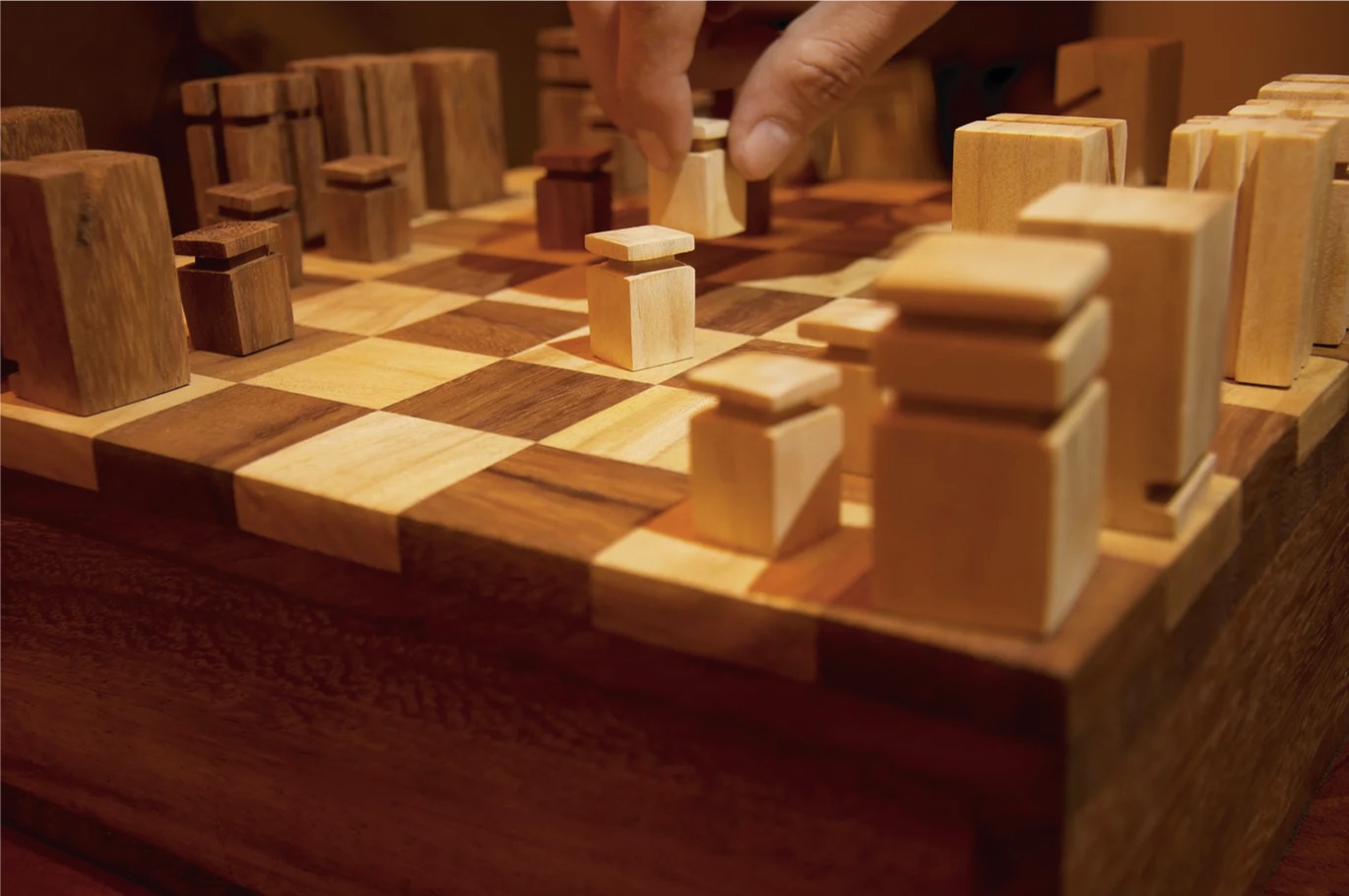
A hand moving a chess piece across the finished board mid-game
A piece meant as much for playing on as for looking at.
01 — The Process

The board started as raw stock, cut down into individual checker squares on a table saw, then glued up square by square into the playing surface itself. The pieces came next, each one shaped and cut by hand until every piece had its own silhouette, something you could tell apart by touch as much as by sight.
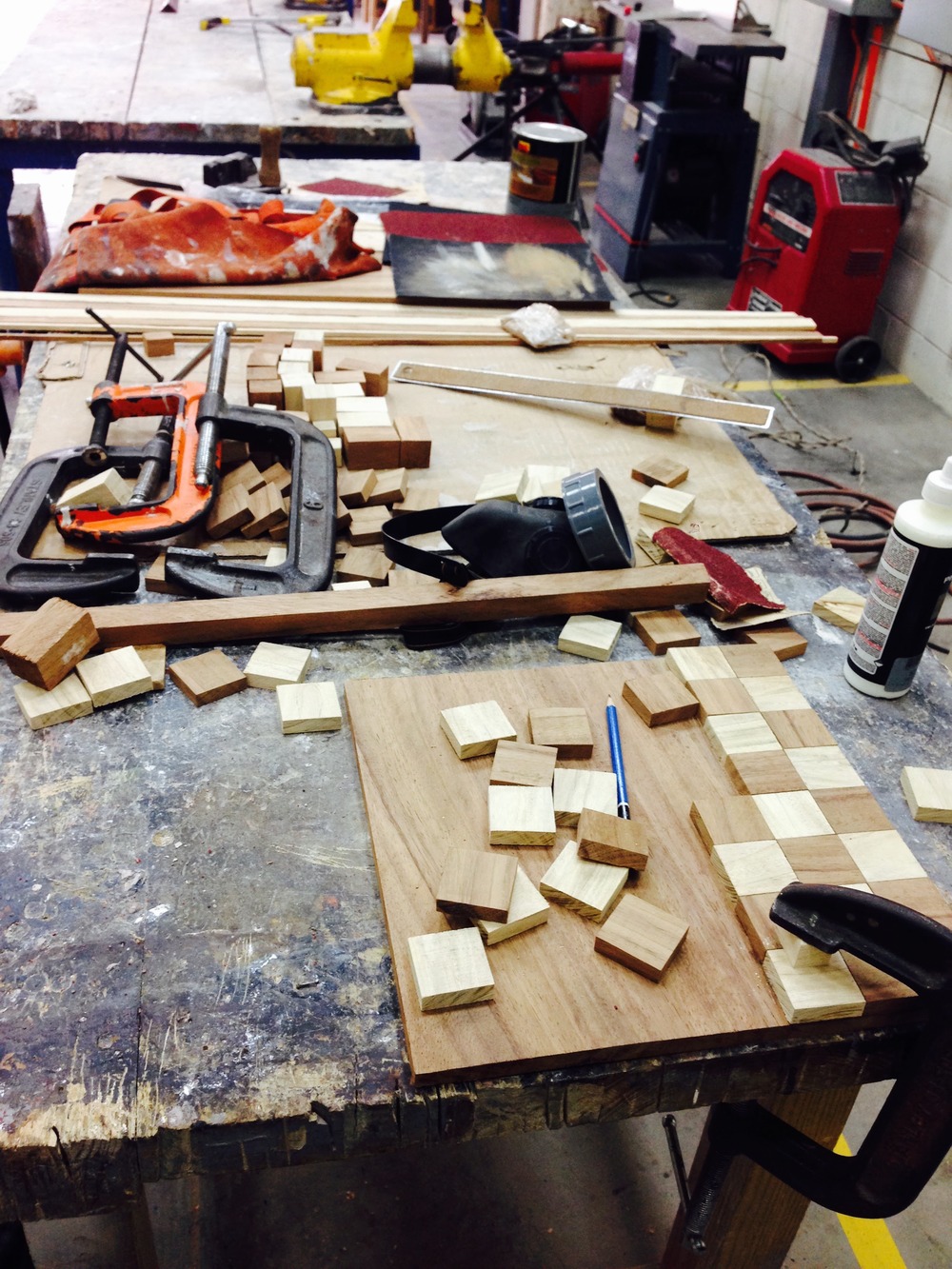
Squares cut from Conacaste and Palo Blanco laid out on the workbench with clamps and tools, checker pattern forming
Squares cut and laid out on the bench before glue-up.
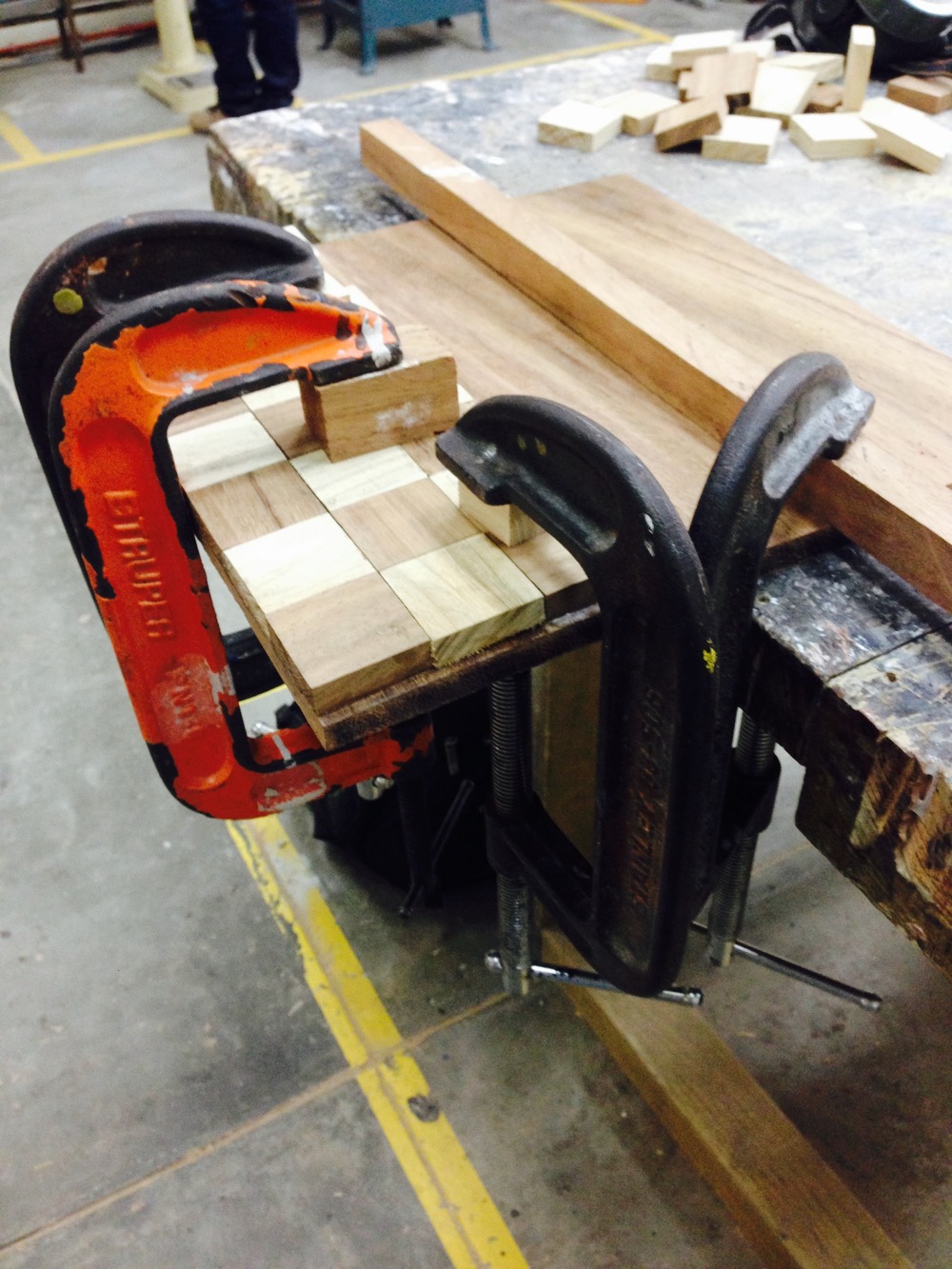
A small section of the checker pattern clamped while the glue sets
A section of the board clamped while the glue sets.
The glued-up board on the workshop floor with pieces sorted in a line from dark to light
Sorting the pieces by tone before deciding where each one goes.
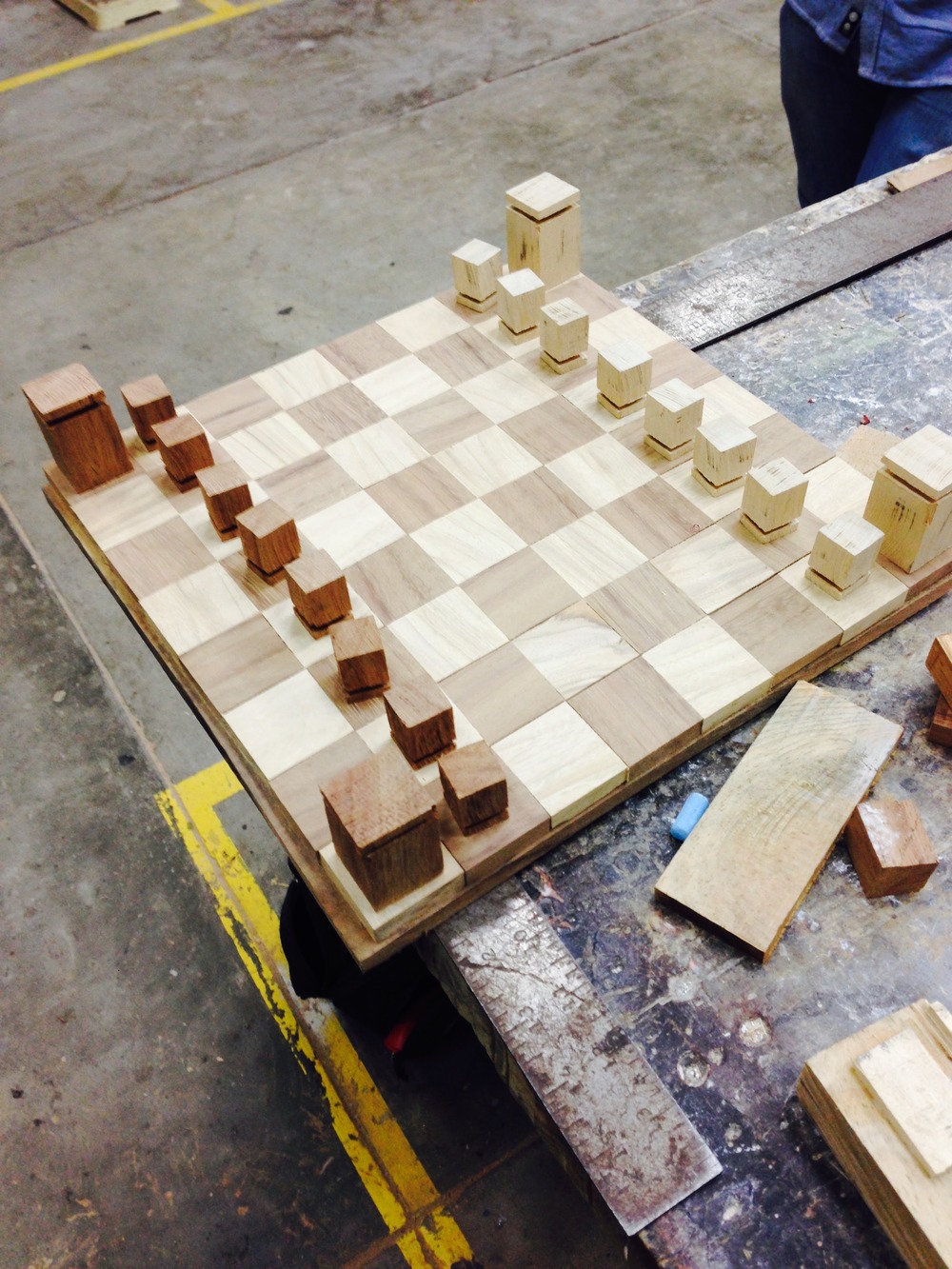
Rough-cut chess pieces arranged on the unfinished checker board, before final shaping
Early pieces laid out on the board, before final shaping.
02 — The Material

The board is built from two woods: Conacaste and Palo Blanco. Conacaste is soft, with prominent veins and a rich, dark hue, and Palo Blanco is harder, lighter, with a more subtle grain. Put next to each other, they give the board and the pieces a natural contrast between the two sides, no stain or dye needed.
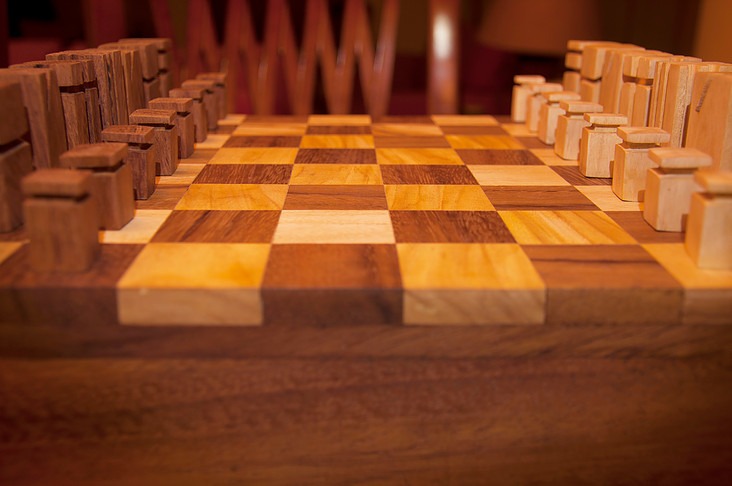
Eye-level view down the length of the board with pieces set up on both sides, showing the wood contrast
Conacaste and Palo Blanco pieces, set up on the board.
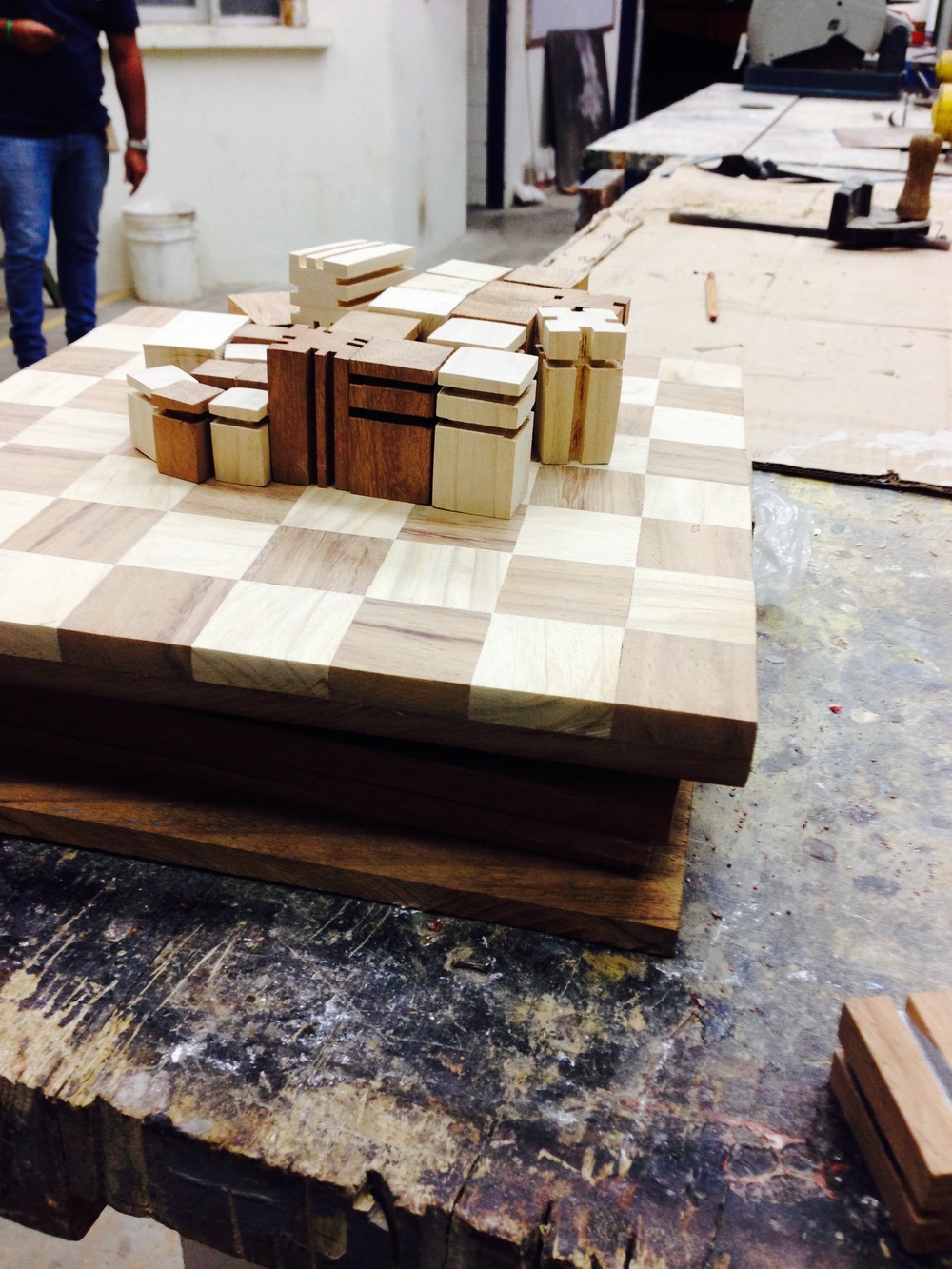
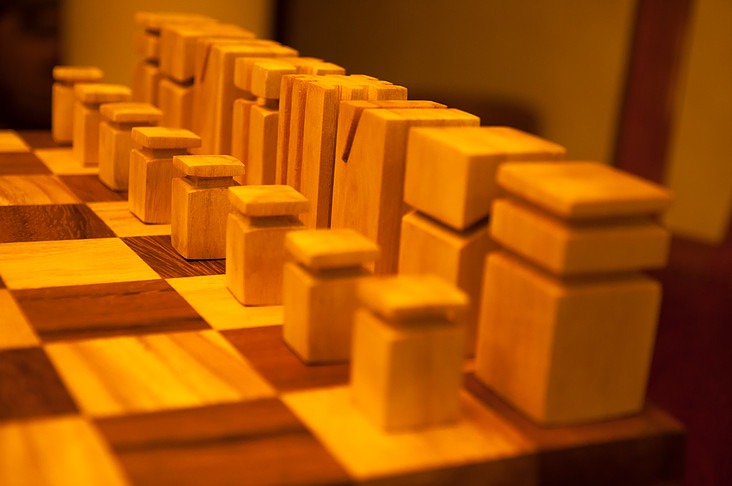
Close-up of the geometric chess pieces showing the grain and cut of each wood
The geometric cut of each piece, up close.
03 — Storage and Finish

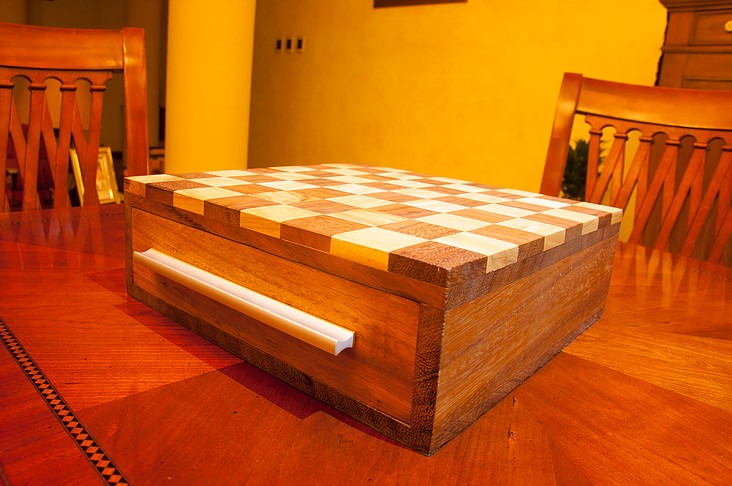
The board doubles as its own case. Underneath the playing surface is a fabric-lined drawer where every piece has its spot, so the set that was just out on the table a minute ago packs away into something that looks just as much at home closed. The finish is a few rounds of fine sanding and a light coat of clear matte varnish, enough to protect the wood from dust and water without hiding the grain underneath.
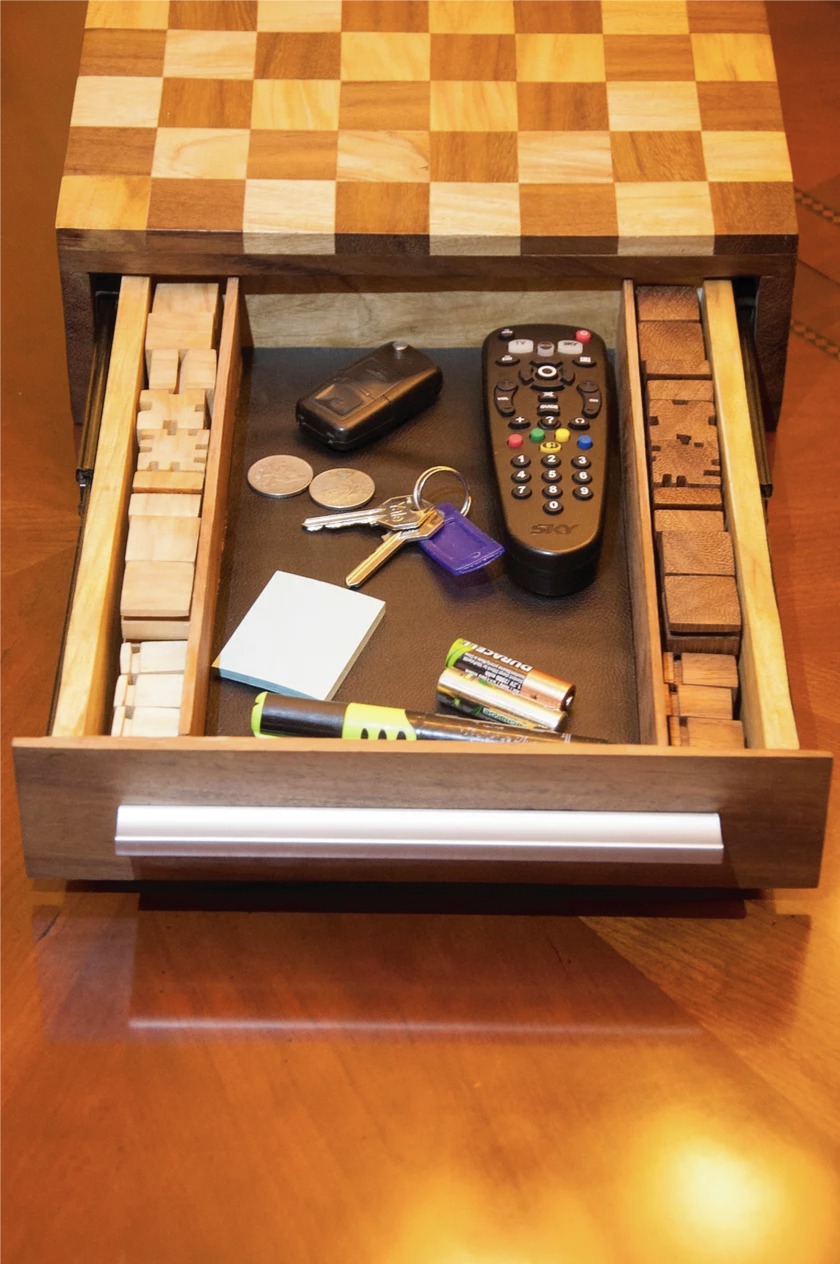
The chessboard's drawer pulled open, showing all the pieces stored in their own compartments
The drawer underneath, every piece with its own spot.
The chessboard closed, sitting as a box on a dining table between chairs
Closed, it sits as a box in its own right.
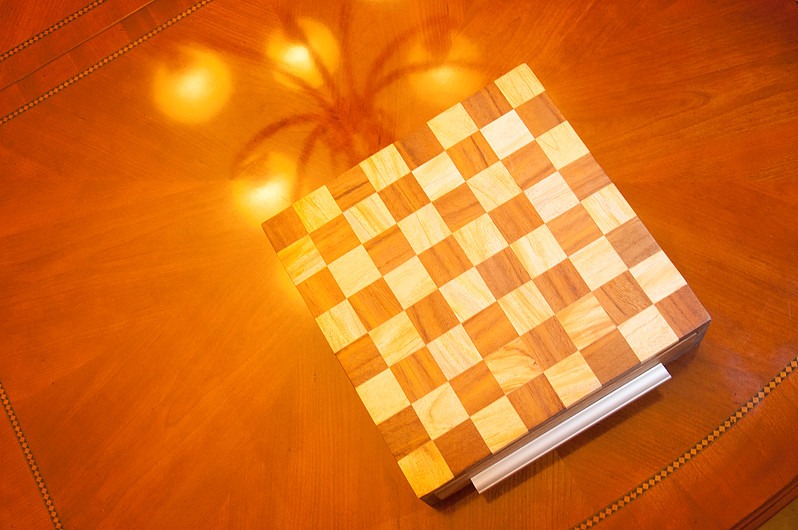
Overhead shot of the finished wooden chessboard on a coffee table, warm ambient light
The finished board, styled on the coffee table it was built for.
Next Project Artistic Drawings →