Bezier
A modular table system built on one shared base and two leg heights: 30 fixed sizes across six categories, dining and coffee tables in rectangle, circular, and square.
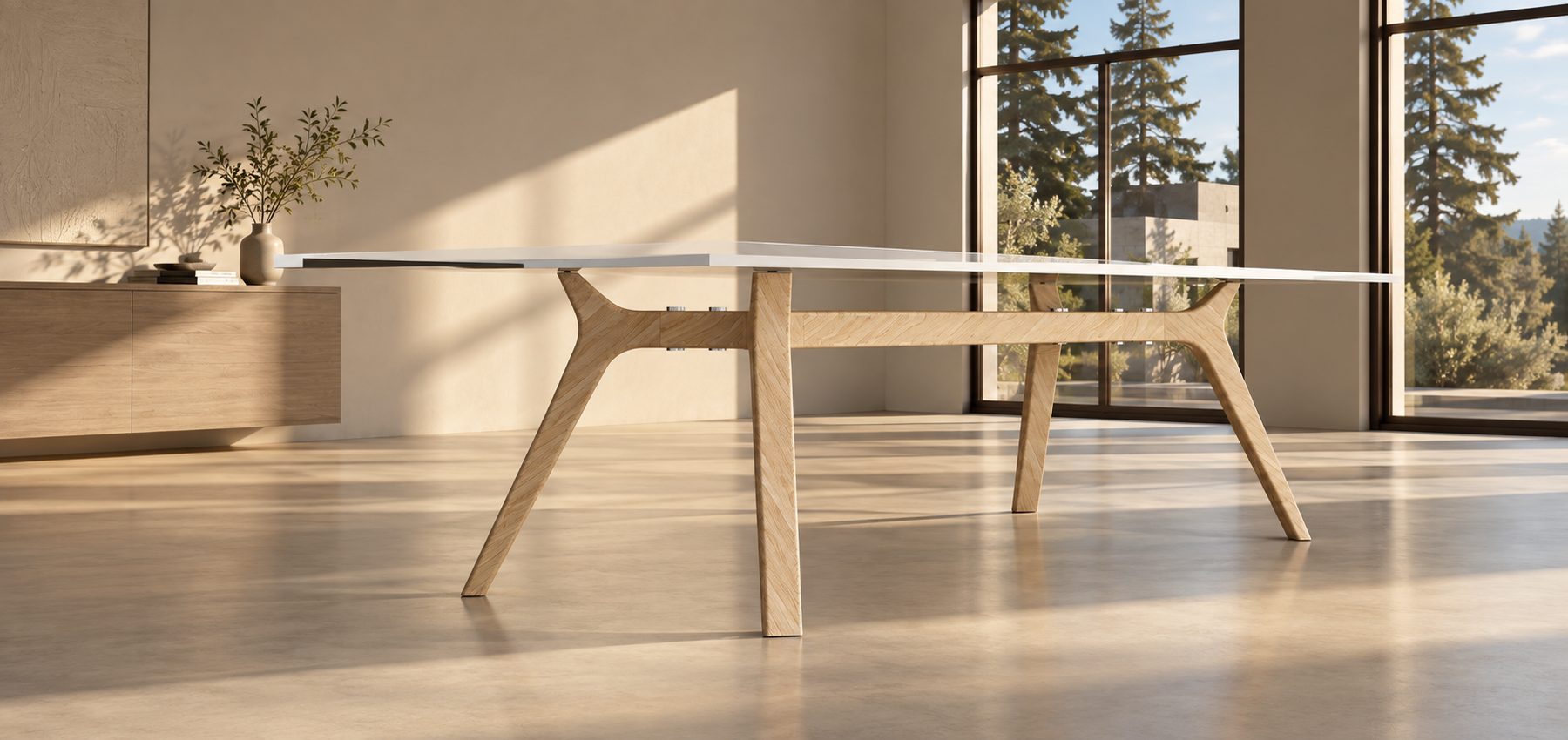
Bezier started from a real brief, not a problem I invented for myself. I was working at Habitat, Grupo Recinos' furniture retail brand, and the assignment was a build-your-own dining table concept: customers pick a base and a top and combine them into the table they want. That mix-and-match retail idea is the actual starting point.
While I was designing it, I kept thinking about a bigger use case on my own: hospitality furniture. A hotel buying out 100 to 150 rooms' worth of nightstands, desks, and tables, 200 to 300 units at once, runs into the same problem eventually. Pieces get chipped, a leg cracks, and the usual fix is either ad hoc carpentry repairs or discounting the damaged piece and rebuying in bulk. A modular system would let a hotel stock interchangeable parts, say 300 long legs, 200 short legs, 100 round bases, and swap only what's actually broken. I never got to test or research that properly, it's a direction I thought through myself, not something I validated, so I'm keeping it here as the thinking behind the system rather than the brief I was actually solving.
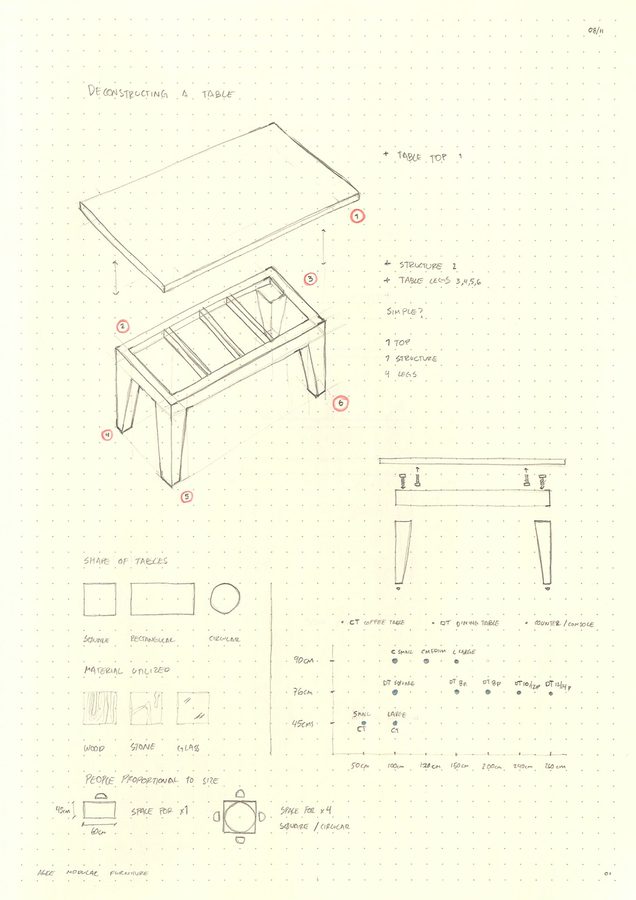
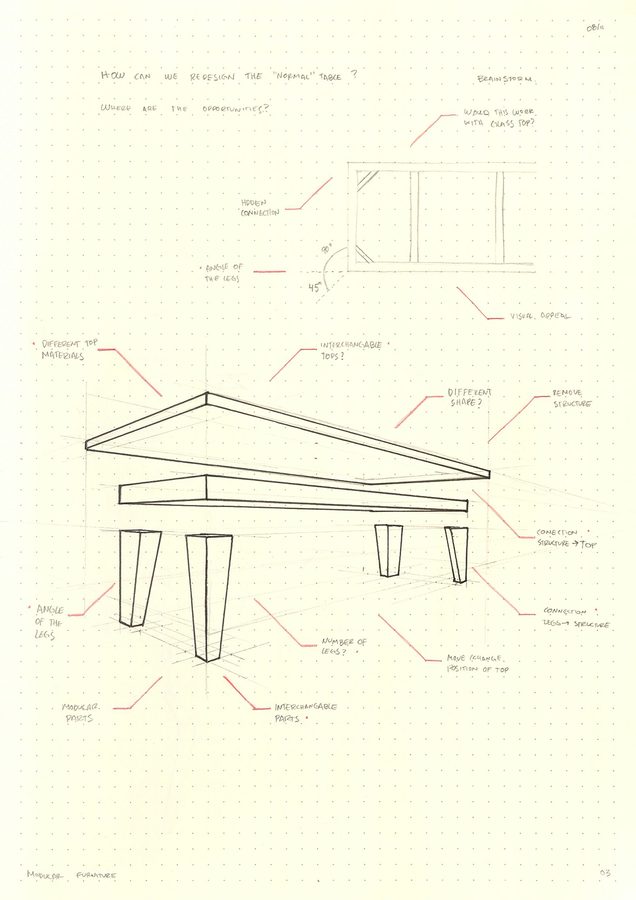
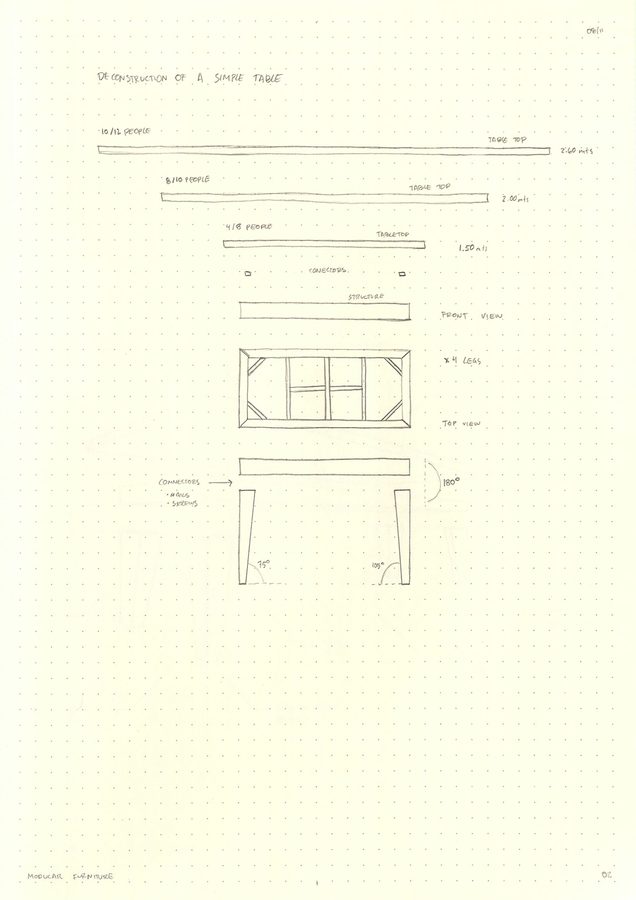
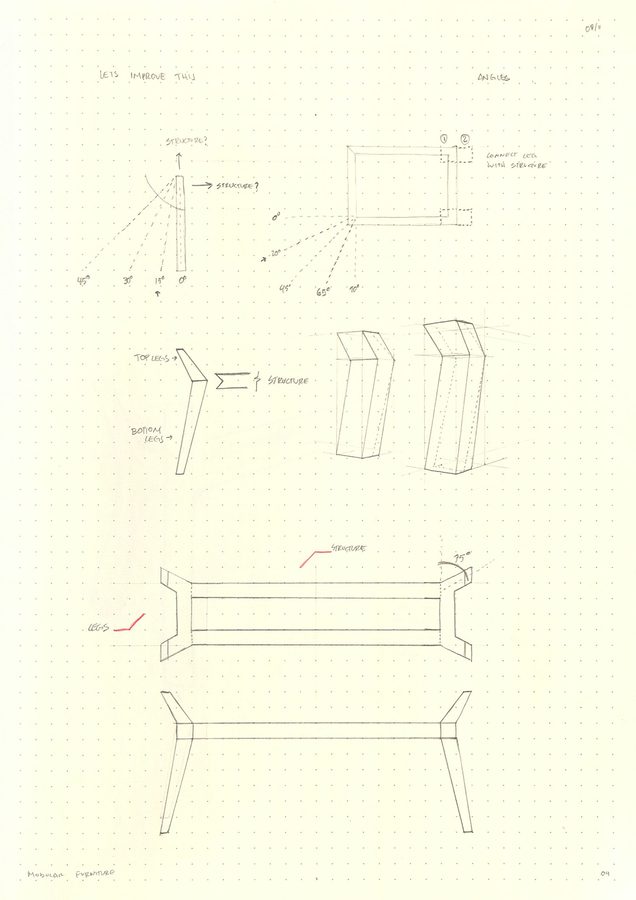
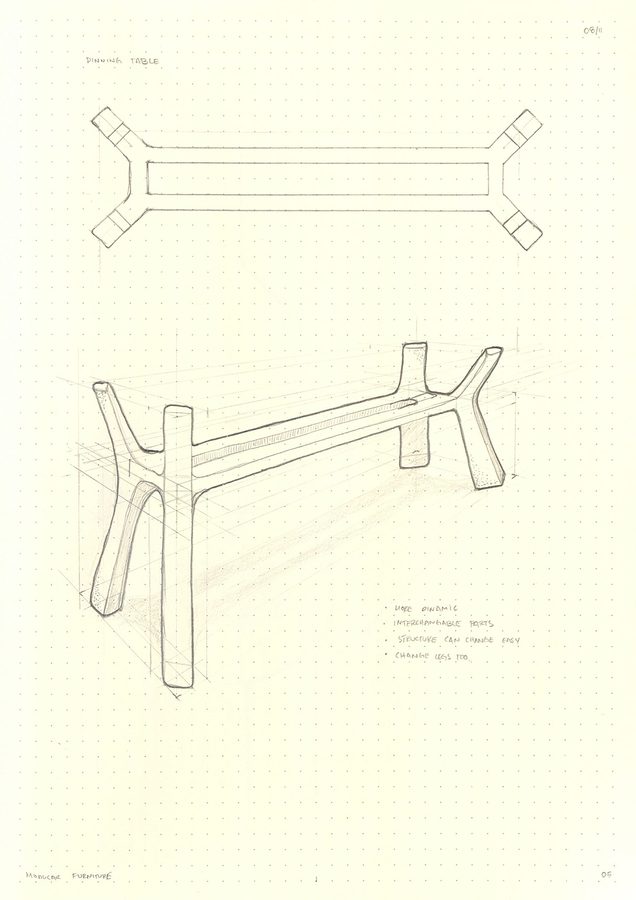

Bezier isn't one table, it's a fixed catalog built on the same base and leg system: six categories, thirty models in total. Rectangle, circular, and square dining tables, and the same three shapes again at coffee-table height. Every model shares one base, the connector that sits under the top and grips the legs, paired with one of two leg heights: long for the dining tables, short for the coffee tables.
Rectangular tables use two bases, one at each end, joined by a stretcher that sets the table's length. Circular and square tables use a single base instead, with three, four, or five legs arranged radially around it depending on the size. Dimensions follow standard conventions for each type, nothing invented for a nicer number: rectangle dining tables come in four fixed lengths, 1.80m up to 3.00m; circular and square dining tables come in three sizes each, 1.60m to 2.00m, with a choice of leg count at every size; coffee tables repeat the same three shapes at the lower height, two rectangle sizes and one size each for circular and square, again with a leg-count choice on the round and square versions.
The name comes from the base itself: the original leg-to-top connection was built around Bézier-curve joint geometry. Looking back, that was a mistake I made without realizing it at the time, I used the curved geometry to make a genuinely hard modularity problem look resolved, instead of actually solving it. A studio critique from Jiri Krejcirik caught exactly that, and he was right. The redesign drops the decorative curve and rebuilds the connection to work as an actual swappable joint, that's the core of the remodel.
The system is designed around CNC-cut sheet material for the base and legs, so pieces can be cut and assembled quickly without custom joinery for every order. I worked through six sketches before landing on the version I built: the five-leg circular coffee table, base and legs CNC-cut from plywood, assembled, and fitted with a glass top. It's the only configuration I've physically built so far, the rest exist as 3D models. Glass is the top I'm leading with here too, it's the material that actually shows off the base and leg design instead of hiding it.
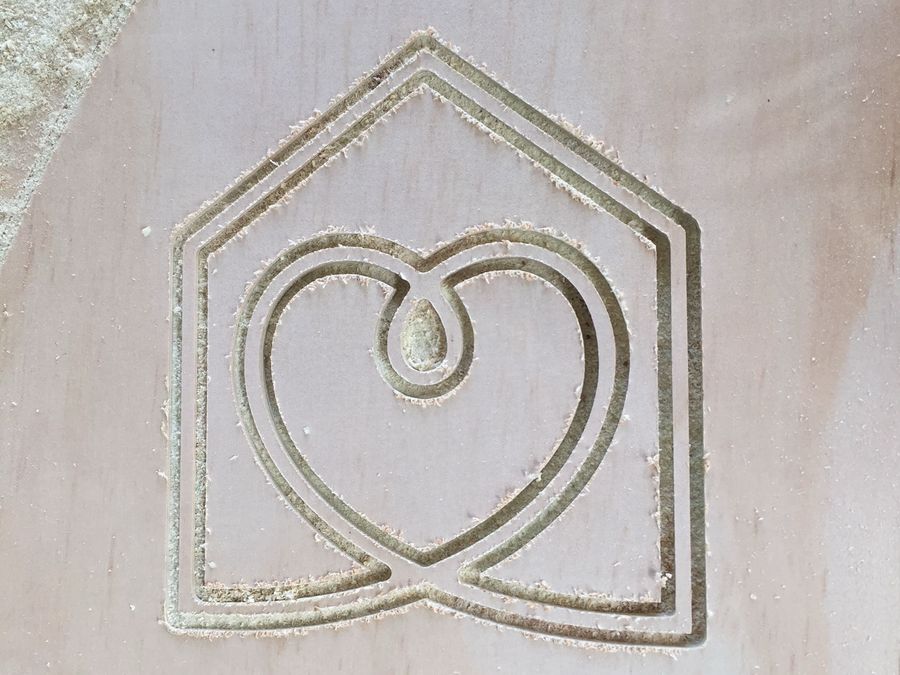
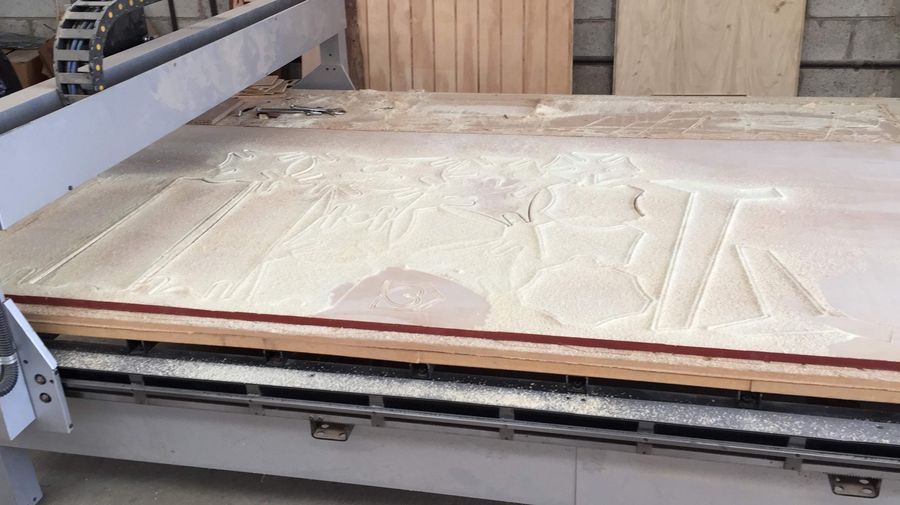 CNC-cut prototype, 1 of 6
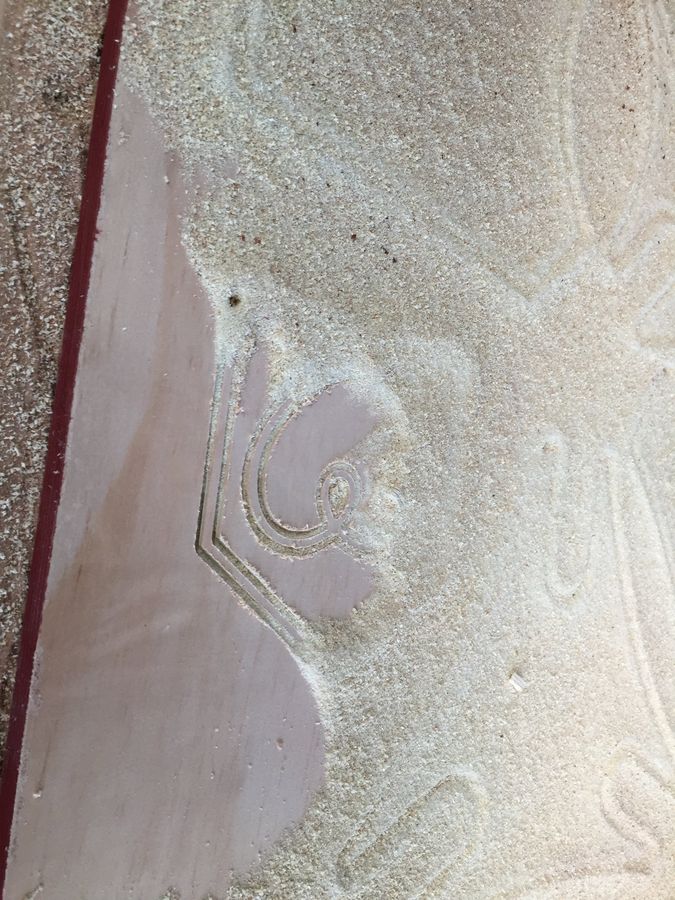 CNC-cut prototype, 2 of 6
 CNC-cut prototype, 3 of 6
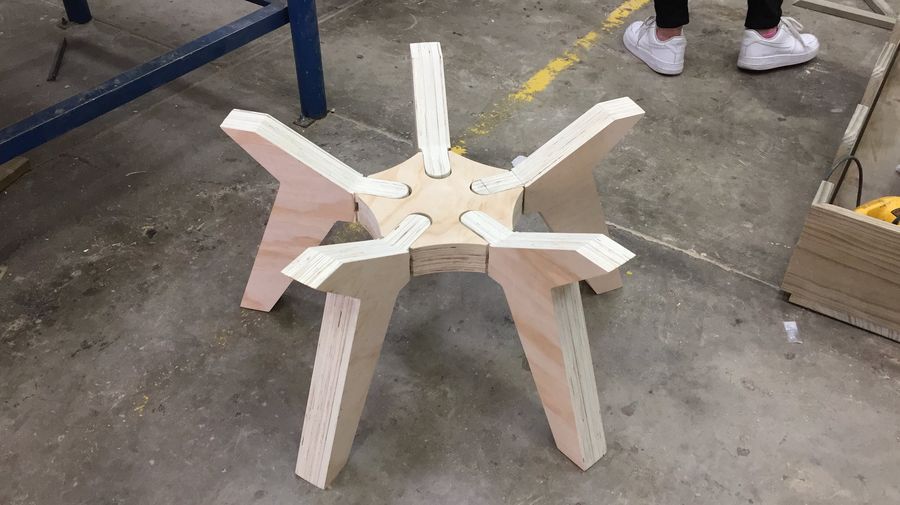 CNC-cut prototype, 4 of 6
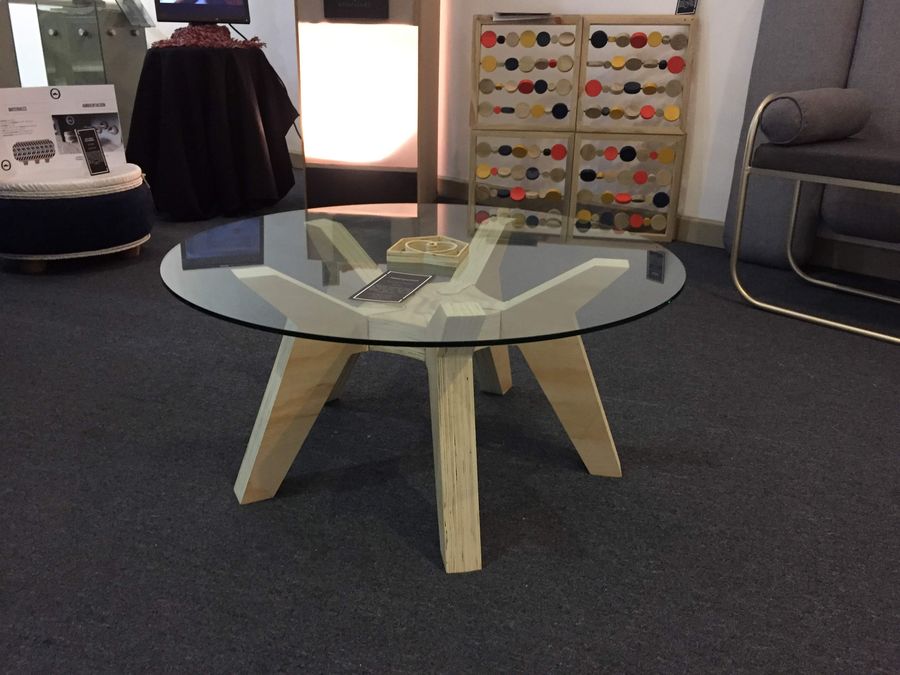 CNC-cut prototype, 5 of 6
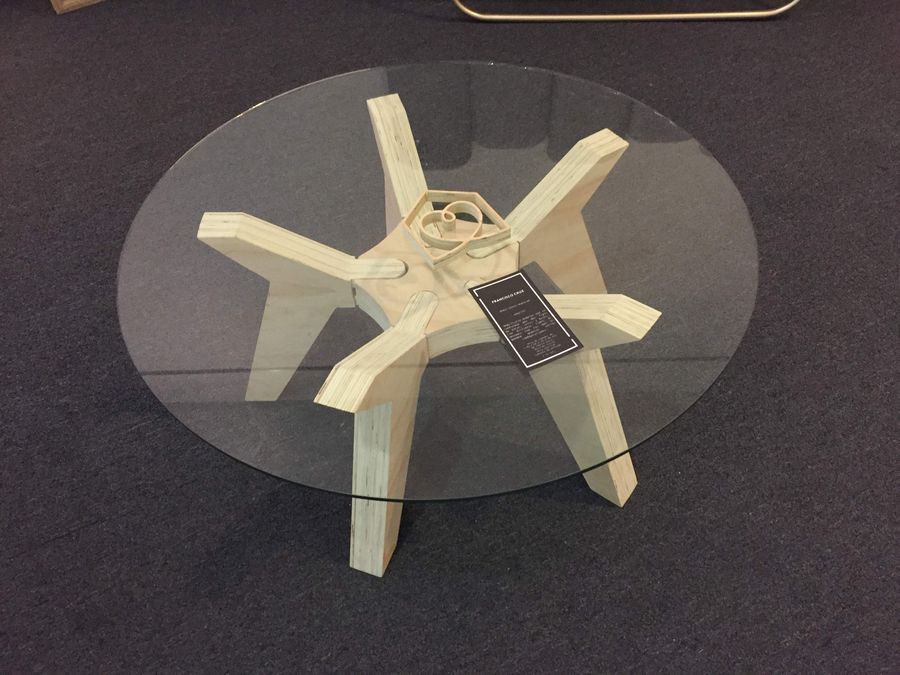 CNC-cut prototype, 6 of 6
Bezier went through more than one version even as a student project, and the leg-to-base connection specifically got revisited and improved along the way, and could still improve more. I picked it back up during my Master's, and informal feedback from Jiri Krejcirik pushed the design further, which is what's driving the current remodel: a proper connection redesign, new models, and new renders, from a hero shot down to a close-up of the connection itself and each configuration.
I also wanted to take it further into something interactive: pick a piece from the family and see its own model, orbited and zoomed rather than shown as a static render. That's live below: pick a category, then a size and leg count where the category has one, and the model swaps in and you can drag to rotate it.
All 30 models are modeled, exported, and correctly oriented. Pick a category below, then a size and leg count where the category has one: the model swaps live, and you can drag to rotate it.
Renders of the assembled dining table across a few of the fixed sizes, shown in the kind of interior setting the piece is actually meant for.