Forma
A modular, tool-free furniture system designed to make decent furniture affordable for people furnishing their first home.
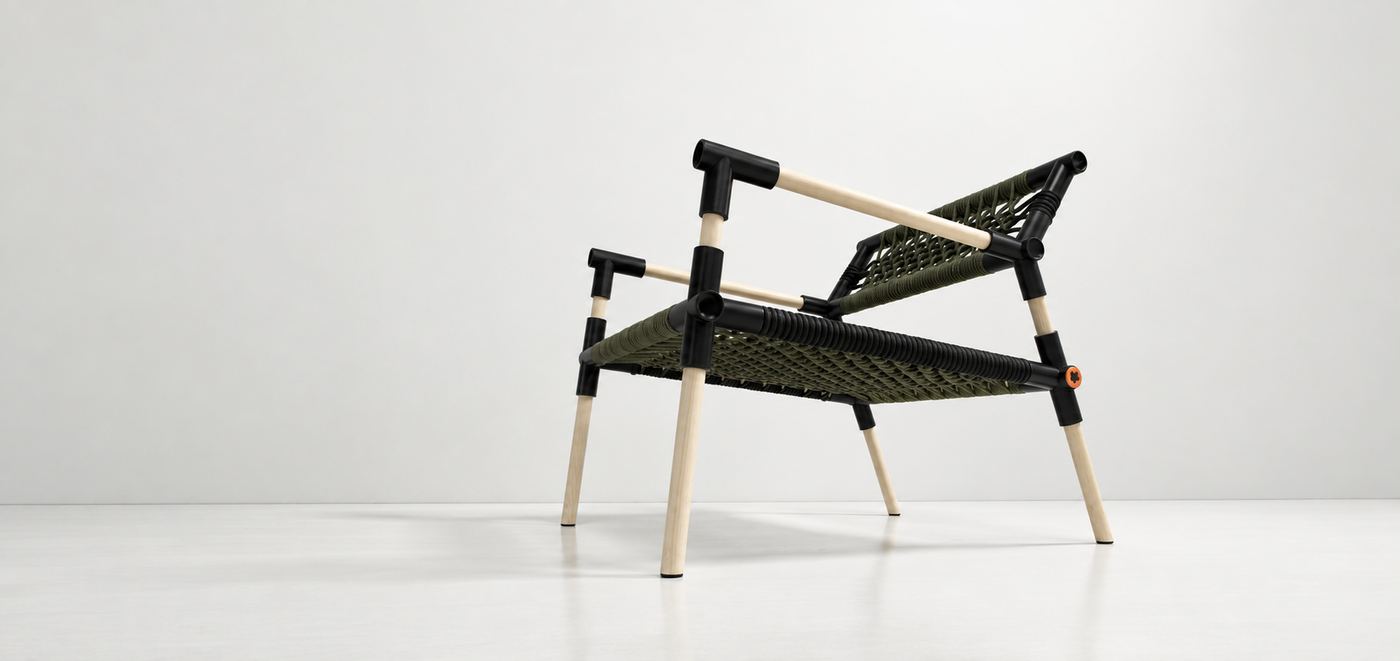
Moving into a first apartment eats the budget before furniture even enters the picture. Realtor commission, first month's rent, and deposit are usually gone before you've bought a single chair.
What's left is a choice between two bad options. Free or cheap alternatives (a pallet sofa, a used and slightly dirty chair off Facebook Marketplace, whatever turns up in a local Buy Nothing or free-stuff group) get furniture into the apartment, but rarely anything worth keeping. The other option, a genuinely well-made kit, usually asks for either advanced maker skills or a budget that defeats the point.
Forma is built for that specific gap: young adults furnishing their first place, DIY beginners, people with a full toolbox and people with none.
Before designing anything, I looked at what people already do to furnish a first place: the pallet-sofa side of DIY furniture culture, the resale side (Facebook Marketplace, local free-stuff groups), and small-batch flat-pack brands positioned as the affordable option. Each covers part of the problem. None of them cover all of it: cheap, decent-looking, and buildable without a workshop.
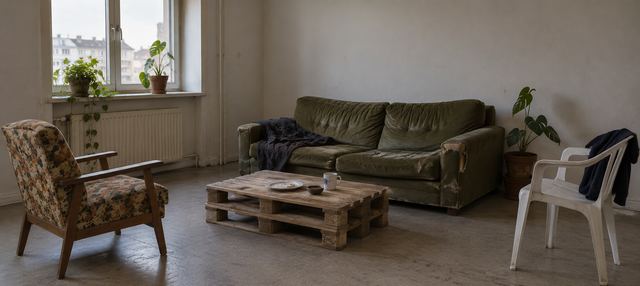 A pallet-sofa DIY build
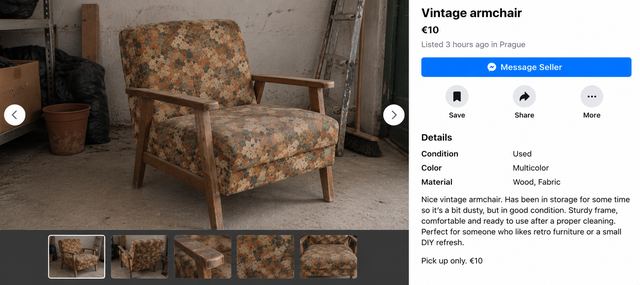 A Facebook Marketplace listing, used chair
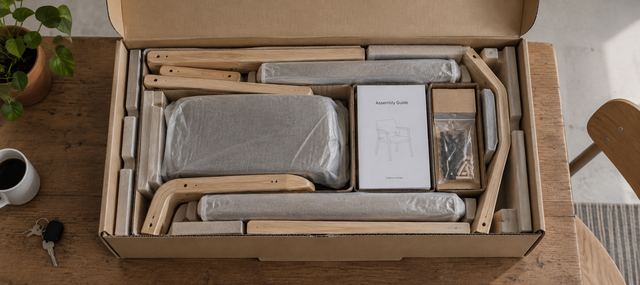 A flat-pack kit, for comparison
That gap set the brief: modular, low-cost, built from materials sold at any hardware store, assembled without power tools or glue, and simple enough that someone building their first piece of furniture could actually finish it.
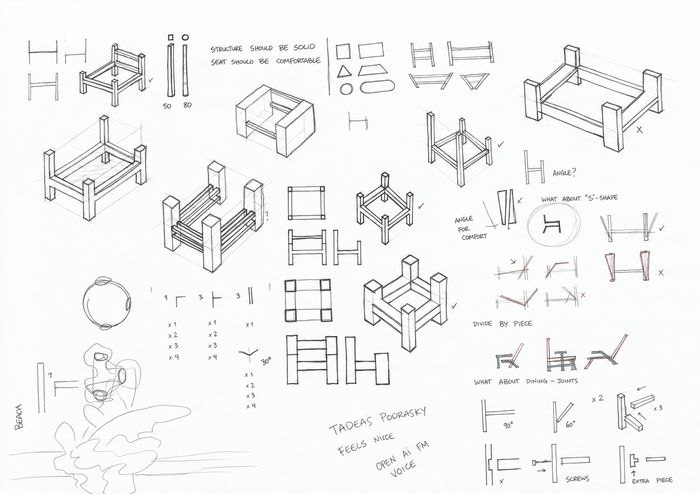
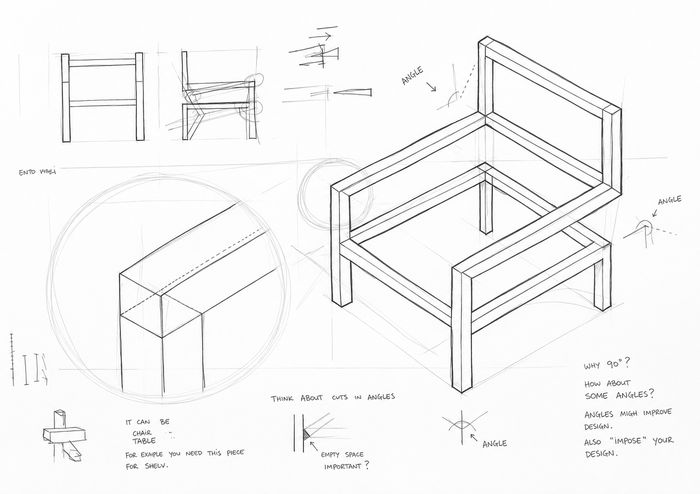
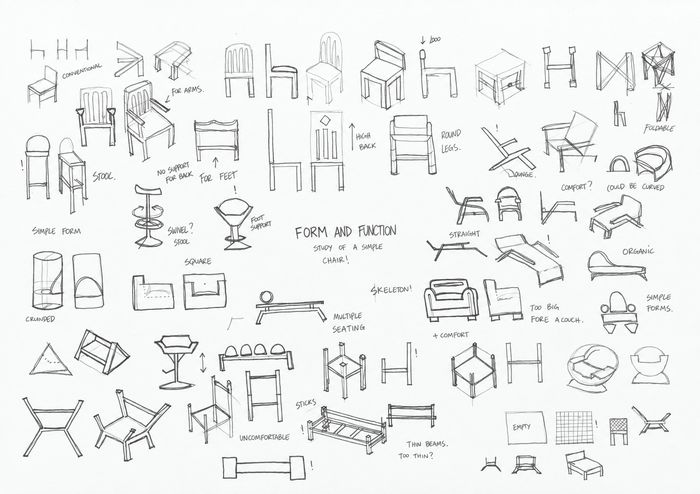
Three sketches from that period, turning the brief above into an actual chair.
Getting the connector joint right took the most rounds. Early prints, made with a rounder profile, held loosely and needed glue to stay put, which defeated the whole tool-free premise. Switching to an angled print orientation and reworking the raft and brim settings solved a separate problem (warping), and PETG, used instead of PLA for its added flex, gave the joints enough grip to hold wood or aluminum by friction alone.
Cutting the beams by hand wasn't accurate enough for the joints to sit flush, so I designed and printed a cutting jig to keep every cut square, then a second jig for the leg angles so the finished chair sits flat.
The rope seat went through its own round of testing: a diagonal, two-layer weave ended up balancing structural strength with comfort better than a single-layer pattern.
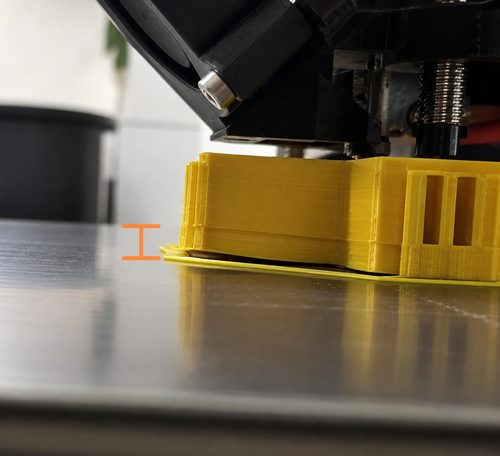 Joint prototype, round profile, v1
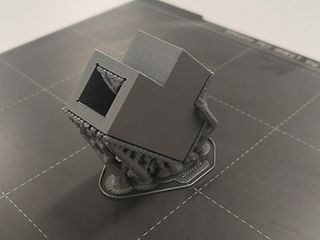 Joint prototype, angled print orientation, v2
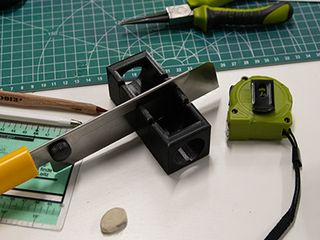 The cutting jig
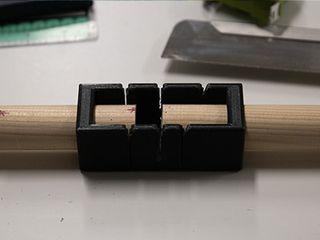 The leg-angle jig
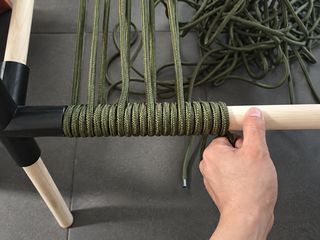 Rope weave test, single layer
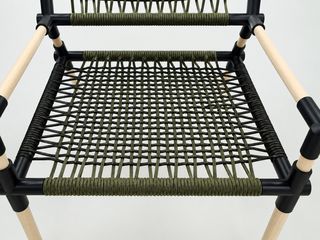 Rope weave, diagonal two-layer, final pattern
With the joint and the weave both working, the system came together as three ways to get the same chair: build it entirely yourself from the manual and hardware-store materials, print the connectors yourself and have the rest of the kit shipped, or skip the building altogether and have it arrive fully assembled. Same design, three points of entry, depending on how much someone wants to build versus simply wants to own.

The finished chair holds together on friction alone, no glue, no screws, and can be built with nothing more than a drill and a saw.
To find out if the system actually worked for someone other than me, I gave a friend the printed manual with no other help and asked her to build a scaled version herself. She did, which is the real test: not whether I could build it, but whether anyone else could.
Forma scored 85, the highest mark on the degree.